
8 Types of Decks Material for Guelph Homes

You're standing in a Guelph backyard, comparing three very different quotes. Pressure-treated wood keeps the upfront cost manageable. Cedar offers the warm grain and natural character you want to see from the kitchen window. Composite or another synthetic surface promises fewer weekends spent washing, staining, and resealing boards.
The right choice among these types of deck material depends on more than appearance. Foot traffic, shade, drainage, freeze-thaw exposure, desired maintenance, and the project budget all matter. This guide evaluates eight options through the same homeowner lens: upfront value, care requirements, seasonal performance, design fit, and the kind of outdoor living each material supports.
You'll find practical trade-offs for pressure-treated wood, cedar, composite, PVC, tropical hardwood, recycled plastic, metal, and hybrid systems. Ontario approval and permit requirements also deserve attention, particularly for alternative products. A site assessment, consultation, permit-ready drawings, and code-compliant installation can resolve the details that a product brochure can't.
Table of Contents
1. Pressure-Treated Wood - Where treated wood earns its place
4. PVC Vinyl Decking - Moisture resistance isn't the whole decision
5. Tropical Hardwood Decking - Premium character with specialist demands
6. Recycled Plastic Decking - Verify the story behind the board
7. Metal Decking - A specialized choice, not a default upgrade
8. Hybrid Deck Systems - Design the interfaces, not just the materials
1. Pressure-Treated Wood
A pressure-treated deck makes sense when the project must stay within a controlled budget, include stairs or multiple levels, and remain straightforward to repair. Preservatives are forced into the lumber, improving resistance to rot, decay, and insects. The material is widely available, so contractors can usually source matching boards without much delay.
For a family deck with ordinary foot traffic, treated wood performs well when the framing, drainage, and fastening are properly planned. Its appearance is familiar and adaptable, from a simple platform to a dining area with built-in seating. It supports practical outdoor living, though it requires more upkeep than synthetic boards.
Where treated wood earns its place
Installed pressure-treated decking commonly falls around $35 to $55 per square foot, with a typical 300-square-foot deck estimated at roughly $9,000 to $13,500 according to Ontario pressure-treated deck cost estimates. With proper maintenance, treated decks are estimated to last 15 to 25 years by the same Ontario source.
That lower upfront cost comes with a maintenance burden. Boards can weather, split, warp, turn gray, or develop soft areas when water collects around fasteners and joints. Regular inspection, cleaning, staining, and sealing should be part of the ownership plan.
Practical rule: The cheapest board will not produce a cheap deck if the framing sits in wet soil, the ledger is poorly flashed, or water cannot drain beneath the surface.
Guelph's freeze-thaw cycles make drainage and connection details especially important. For framing close to grade, choose lumber approved for the exposure. Ontario guidance states that exterior structural wood within 150 mm of grade must be decay-resistant, such as cedar or preservative-treated lumber (Ontario deck durability and code guidance).
Specify ground-contact treatment where required, along with stainless steel or hot-dipped galvanized fasteners. Let new lumber weather before applying a finish. Light sanding can help sealer adhere, but timing depends on the product and the wood's moisture condition. A treated-wood frame paired with a lower-maintenance surface can also reduce maintenance where appearance and long-term use matter most.
2. Cedar Decking
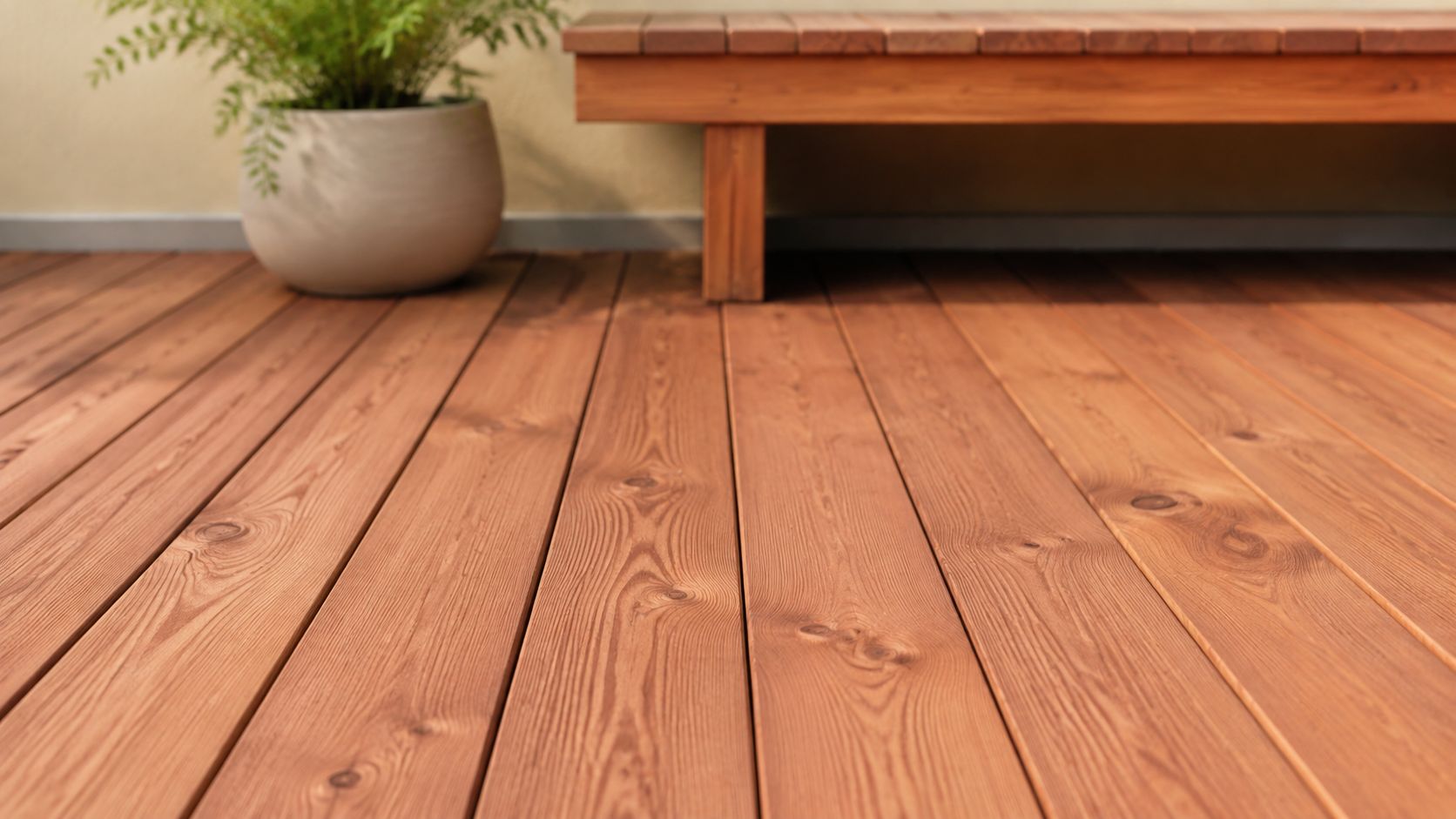
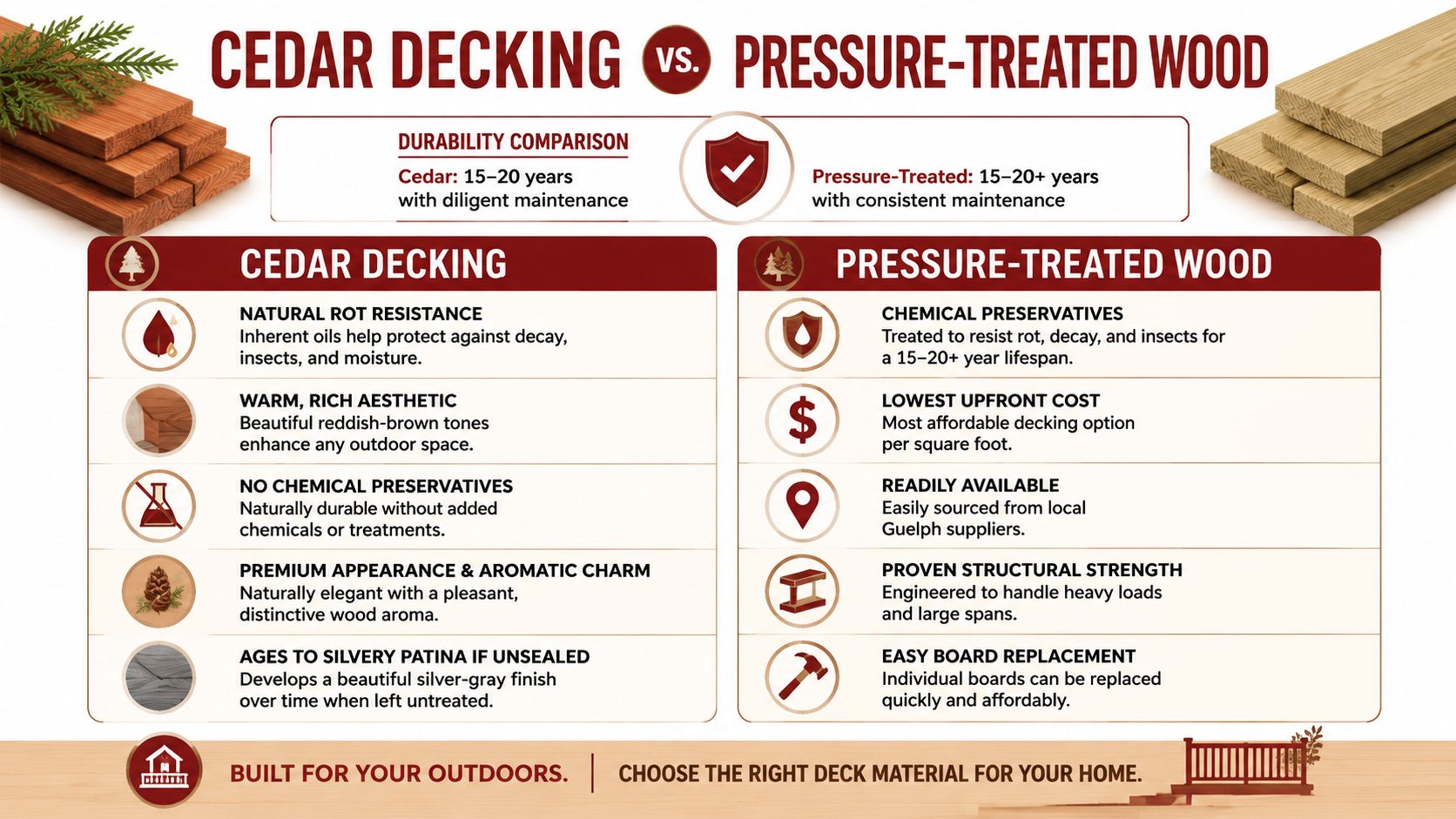
Cedar works well when the deck is visible from the kitchen, living room, and main garden path. Its warm colour, open grain, and natural aroma give a Guelph backyard more character than standard treated lumber. Natural oils and tannins help resist decay, although cedar still requires suitable construction and finishing.
The upfront cost is higher than pressure-treated wood. Ontario estimates place installed cedar at approximately $45 to $65 per square foot, with a 300-square-foot cedar deck costing about $12,000 to $18,000 (Ontario cedar and composite pricing guide).
Beauty needs a maintenance plan
Cedar pairs well with Guelph's historic brick facades on Toronto Street, where its warm tones complement heritage siding. It also fits painted wood exteriors, stone steps, garden borders, and built-in seating with visible wood grain. Use it where the deck should feel connected to the house rather than like a uniform platform.
Cedar is softer than dense hardwood. Chair legs, pet traffic, and frequent gatherings can leave dents or scratches, so it suits households prepared to accept some surface marking. Shaded sections need regular inspection because trapped moisture can speed deterioration. Check fasteners, board ends, and joints first, then correct drainage or splashback problems before applying a finish.
Guelph's freeze-thaw cycles make sound framing, drainage, and secure connections more important than cedar alone. Keep boards clear of standing water, allow movement at joints, and use fasteners suited to exterior cedar. A semi-transparent stain preserves more grain than a solid colour, but the boards should weather according to the sealer manufacturer's instructions before finishing.
A clear or lightly tinted finish keeps the colour richer and adds maintenance. Leaving cedar unfinished reduces finishing work but allows it to turn silver-gray. The cedar deck staining guide covers timing, product selection, and finish choices.
3. Composite Decking
Composite decking combines wood fibres with plastic polymers, creating boards that suit homeowners who want a finished outdoor room with less seasonal staining and sealing. For Guelph families, it fits family decks, shaded platforms, rental properties, and multi-level designs where consistent colour matters.
Composite boards resist rot, making them suitable for shaded yards where moisture lingers. They still require careful installation. Thermal movement, board spacing, under-deck ventilation, and drainage affect performance through freeze-thaw cycles. Good framing and airflow matter as much as the surface product.
Paying more for less upkeep
Installed composite decking is estimated at about $55 to $100 per square foot, while Ontario lifespan estimates place it at roughly 25 to 50 years. The Ontario material comparison and lifespan guide helps frame the upfront cost against expected service life. The investment suits homeowners who value fewer refinishing tasks and predictable appearance over the lower initial cost of basic wood.
Certified products also undergo performance testing. One Canadian Construction Materials Centre evaluation required UV-related losses in strength and stiffness to remain no worse than spruce lumber. It also required decay and fungi resistance to meet or exceed preservative-treated wood under the referenced testing standard (CCMC composite decking evaluation).
Choose an established product line such as Trex, TimberTech, or Azek, and follow its installation guide. Use compatible fasteners, allow boards to acclimate, and keep drainage paths clear. Mild soap and water can address mildew in shaded areas. These safe Trex deck cleaning tips can help set a practical cleaning routine.
Hidden fasteners reduce visible screw heads and support a cleaner design. Review hidden fastener options for composite decking early, since fastening affects spacing, repairs, and appearance.
4. PVC Vinyl Decking
PVC decking is made entirely from plastic, unlike composite boards that contain wood fibre. Because it absorbs little moisture, it suits decks over drainage concerns, beside pools or ponds, and homeowners who want washing instead of regular sealing and refinishing.
This material can work well for an older homeowner reducing maintenance, a rental property needing predictable upkeep, or a busy household that prefers a quick clean. Its uniform colour and clean lines also pair naturally with contemporary railings and modern architecture.
Moisture resistance isn't the whole decision
PVC still requires careful installation. Temperature changes can make synthetic boards expand and contract, so spacing and fastening must follow the manufacturer's instructions. The framing and ledger need proper drainage and airflow as well. A moisture-resistant surface cannot correct standing water or poor structural detailing.
Shaded, damp areas may collect algae or become slippery, depending on the texture. Use a soft brush and mild detergent for cleaning. Where the deck meets a pool or remains wet for long periods, choose a product with suitable slip resistance.
PVC generally costs more initially than pressure-treated wood, while its appearance is less natural than cedar. Dark or exposed boards can also become uncomfortable under strong direct sun, especially for barefoot use. View a sample outdoors before choosing a colour and texture.
For Guelph's freeze-thaw conditions, the surface is only one part of the decision. The substructure, fastener layout, drainage, and movement allowances determine whether the deck performs well through seasonal changes. PVC supports low-maintenance lounging and dining, but it may feel less appropriate for a deck intended to deliver a highly natural look.
Ontario guidance classifies PVC, polyethylene, composite, and metal decking as non-wood products that generally require recognized provincial approval through pathways such as the Minister, BMEC, or CCMC (Ontario deck approval guidance). Before ordering, confirm approval documentation for the exact product and check whether your municipality requests additional railing details. A hybrid approach can also be practical: use PVC where moisture exposure is highest, while selecting another approved material for areas where warmth, texture, or visual contrast matters.
5. Tropical Hardwood Decking
Ipe, cumaru, and tigerwood suit a deck where the boards are meant to define the design. Their dense grain and rich colour work well with premium homes, showcase projects, and outdoor rooms built for dining, entertaining, or quiet lounging.
The trade-off starts with the upfront value. Tropical hardwood costs more to install and demands more specialized labour than common softwood options. Its density helps it handle everyday wear, but installers need pre-drilling, compatible fasteners, accurate cutting, and experience with the material. That makes it a poor fit for a quick budget upgrade or a casual do-it-yourself project.
Premium character with specialist demands
Choose tropical hardwood when a distinctive natural surface matters more than low installation cost or easy local replacement. Boards can weather to a silver-grey appearance or receive a finish that helps retain their original colour. Maintaining a richer tone requires periodic attention, with application timed according to the finish manufacturer's instructions.
Dense boards reward careful planning. Accurate layout, consistent gaps, and clean cuts matter because errors are difficult to disguise and corrections take more effort. The result supports a refined outdoor room, but it offers less flexibility for homeowners who expect to modify the deck often.
Ask the supplier for clear sustainability documentation, including the species source and harvesting information. Responsible sourcing gives the purchase a stronger environmental basis, although it does not remove the material's higher cost or installation demands.
Guelph's freeze-thaw cycles make the full assembly more important than the species name alone. Joist spacing, ventilation, drainage, acclimation, and compatible hardware all affect seasonal movement and moisture performance. Use tropical hardwood for the visible, high-traffic surface, then consider a hybrid system where a different approved material can reduce cost or simplify concealed construction. That approach preserves the hardwood's design impact while matching each part of the deck to its exposure and workload.
6. Recycled Plastic Decking
Recycled plastic decking suits homeowners who want predictable upkeep and a clearer sustainability story. Boards may contain post-consumer plastics from containers or packaging, and some products combine plastic with recycled wood fibres. Treat “recycled” as a starting point for evaluation, not a complete specification.
For a family planning a green-certified renovation or supporting local sustainability initiatives, the material can fit broader household priorities. Its consistent colour and easy cleaning also support regular outdoor dining, children's play, and low-fuss entertaining.
Verify the story behind the board
Ask the supplier for recycled-content details, manufacturing information, and applicable certifications. Transparent documentation provides more useful evidence than a marketing label alone. If the board includes wood fibre, confirm how the manufacturer addresses moisture exposure and what the warranty covers.
Upfront value depends on more than the board price. Consider delivery, supporting structure, future replacement, and end-of-life options. A durable product that stays in service for many seasons may offer a sounder environmental choice than one selected only for its recycled content.
Guelph's freeze-thaw cycles also put pressure on the complete deck assembly. Confirm drainage, ventilation, fastening requirements, and the product's approved structural details before installation. Proper detailing helps limit moisture-related movement and makes seasonal maintenance easier.
Maintenance remains straightforward. Sweep away debris, wash with mild soap, and keep the space beneath the deck ventilated. Stainless steel fasteners can reduce corrosion and rust staining, especially where wet leaves or winter moisture remain near connections.
Recycled plastic works well when predictable care, responsible sourcing, and a consistent appearance matter most. Review colour stability, slip resistance, summer heat, load requirements, approval documentation, and the supplier's ability to provide matching boards later. A hybrid system may improve the overall choice by using recycled plastic where appearance and cleaning matter, while approved conventional materials handle concealed or higher-load components.
7. Metal Decking
Metal decking, typically aluminum or powder-coated steel, suits Guelph homes where a contemporary appearance, moisture resistance, or unusual site conditions matter more than a traditional wood feel. It can fit modern architecture, commercial outdoor areas, waterfront properties, and spaces designed for clean lines and low visual clutter.
Aluminum keeps weight down and resists rot and insects. Powder coating supplies colour, while a textured finish can improve traction. Steel offers a different structural and visual character, but its corrosion protection, drainage, and connection details need careful planning through Ontario's wet and snowy seasons.
A specialized choice, not a default upgrade
Upfront value depends on more than the metal surface. Fabrication, compatible fasteners, supporting structure, and specialized installation can raise the project cost. For that reason, metal usually makes sense when its appearance, durability, or site performance justifies those requirements, rather than as a budget substitute for wood.
Freeze-thaw conditions make drainage and thermal movement important. The installer should detail how the surface sheds water, accommodates seasonal expansion, and connects to the frame. A smooth metal surface may become slippery when wet, while shaded or waterfront locations may need a suitable texture, non-slip treatment, and routine cleaning to limit algae and mineral buildup.
Metal can also feel too industrial beside a traditional brick home or garden-heavy backyard. It transmits sound differently from wood, which may affect comfort during rain or foot traffic. Consider whether the deck will support quiet family use, frequent entertaining, or a design-led outdoor room before choosing the finish.
Installation should be handled by a fabricator familiar with outdoor decking, drainage, thermal movement, and coating-compatible connectors. If the design includes stainless steel railings, review the practical cost of stainless steel railing before committing to a fully contemporary palette.
For residential Guelph projects, metal is a deliberate design choice. Choose it when the architecture, surface texture, drainage plan, and installation budget all support the decision.
8. Hybrid Deck Systems
A hybrid deck combines materials so each part of the structure performs a specific job. The common arrangement is composite decking over pressure-treated framing. Other options include cedar boards on steel supports, vinyl railings with wood or composite decking, or separate materials across zones of a tiered deck.
This setup can balance upfront value, maintenance, freeze-thaw performance, and design fit. Composite suits areas where children and guests gather because it needs less routine care. Treated wood can control costs in a lower or less visible section, while cedar adds warmth at stairs or a seating edge. On a sloped site, stronger support components may improve stability while the visible surface keeps a residential appearance.
Design the interfaces, not just the materials
Mixed systems require one coordinated installation plan. Joists, clips, screws, brackets, flashing, and connectors must match every material. Drainage and ventilation need particular attention where borders or layers could hold water against adjacent components during Guelph's freeze-thaw cycles.
Record the material zones in the drawings. This supports ordering, inspection, future repairs, and replacement planning. It also avoids using one fastening method throughout, even though composite, cedar, treated lumber, and metal differ in movement and installation requirements.
The strongest hybrid designs assign each material to the location where its strengths justify its cost.
Plan maintenance before construction starts. A cedar accent may need refinishing while the composite field only needs periodic cleaning. A steel support may outlast the surface boards, so the design should provide access for board replacement. That distinction matters when the deck will support frequent entertaining, quiet family use, or a more design-focused outdoor room.
If the system includes alternative non-wood products, confirm their Ontario approval documentation and local guard or railing requirements before finalizing the design. Municipal permit triggers also vary. For example, Clearview guidance says a permit is required for decks over 10 m², attached decks, or decks used as an entrance or exit (Clearview deck information guide).
8-Point Deck Materials Comparison
Material | Implementation complexity | Resource requirements | Expected outcomes (durability / maintenance) | Ideal use cases | Key advantages |
|---|---|---|---|---|---|
Pressure-Treated Wood | Low, standard carpentry; easy to install | Low material cost; common tools; galvanized/stainless fasteners; widely available | 15–20+ years with regular sealing; requires annual/biennial maintenance; utilitarian look | Budget family decks, multi-level spans, municipal projects | Most economical upfront; proven structural performance; easy board repairs |
Cedar Decking | Low–Medium, standard carpentry; softer wood easier to work | Medium–high material cost; cedar-specific sealers; premium-grade recommended | ~15–20 years with diligent maintenance; seals every 1–2 years; ages to silvery patina | High-end residential, custom designs, homeowners valuing natural aesthetics | Natural rot resistance; warm appearance; no chemical preservatives |
Composite Decking | Medium, follow manufacturer spacing and fastening guidelines | High upfront cost; brand-name materials; composite-specific fasteners | 25–30+ years; minimal maintenance (periodic cleaning); consistent color/finish | Low-maintenance family decks, rentals, shaded or high-traffic areas | Low maintenance; resists rot/warping; splinter-resistant; long-term value |
PVC (Vinyl) Decking | Medium–High, precise installation for thermal expansion | Highest upfront cost; premium PVC brands; experienced installers recommended | 30+ years; virtually maintenance-free; impermeable to moisture and rot | Decks over water, wet/shaded sites, low-maintenance or elderly-owner properties | Zero/very low maintenance; stain- and moisture-proof; longest lifespan |
Tropical Hardwood Decking | High, heavy dense boards; specialized tools and techniques | Very high material and labor cost; expert installers; source certification advised | 25–40+ years with minimal upkeep after initial sealing; exceptional durability | Luxury custom decks, showcase projects, high-end hospitality | Outstanding longevity; exotic aesthetic; naturally rot- and insect-resistant |
Recycled Plastic Decking | Medium, similar to composite installation practices | High cost comparable to composite; verify recycled-content certifications | 25–30+ years; low maintenance; eco-friendly performance | Environmentally conscious homes, green-certified projects | Sustainable (uses diverted plastic); low maintenance; reduces landfill waste |
Metal Decking (Aluminum / Steel) | High, requires metal fabrication and precise engineering | High cost; powder-coating options; specialized fabricators; non-slip treatments | 20–30+ years; minimal maintenance; non-combustible; corrosion-resistant (aluminum) | Contemporary residential designs, commercial sites, waterfront or fire-sensitive areas | Fire-resistant; no rot/splinters; highly recyclable; modern aesthetic |
Hybrid Deck Systems (Mixed Materials) | High, sophisticated design, material compatibility checks | Variable cost (can optimize budget); skilled designers/contractors; mixed fasteners | Mixed lifespans based on chosen materials; optimized performance and maintenance plan | Complex sites, budget/aesthetic balancing, custom multi-zone decks | Tailored performance and cost; flexibility to prioritize appearance where it matters most |
Choose the Material That Fits Your Real Priorities
There isn't one universal winner among the main types of decks material. The right surface depends on how you use the space, how long you expect to own the home, how much maintenance you'll complete, and whether the site exposes the deck to persistent moisture, shade, or heavy traffic.
Start with the budget question. Pressure-treated wood offers the lowest upfront position and works well for practical family decks, stairs, and larger multi-level layouts. Cedar costs more, but its natural grain and warmth can justify the premium when appearance matters more than minimizing care. Ontario comparisons place cedar's installed premium at roughly $10 to $15 per square foot above pressure-treated wood (Ontario decking cost comparison).
Then consider the maintenance you'll tolerate. Composite and recycled plastic provide a wood-like appearance with lighter seasonal care, while PVC is the stronger candidate for chronic moisture, pool surrounds, and homeowners who want the least demanding surface. One Ontario maintenance guide says TimberTech composite boards generally need a basic wash one to two times per year, including a spring rinse and a more thorough fall cleaning (Ontario composite maintenance guide).
Use tropical hardwood when premium natural character and resistance to everyday wear justify specialist installation. Choose metal when the home's architecture, moisture exposure, or commercial use supports a contemporary system. Choose a hybrid when the deck has different zones, visibility levels, traffic patterns, or support demands.
Before comparing board prices, assess the whole assembly:
Drainage and ventilation: Confirm that water can leave the surface and air can circulate beneath it.
Sun and shade: Consider colour change, surface temperature, algae, and drying time.
Structural support: Match framing, joists, posts, and hardware to the exposure and selected surface.
Fasteners and movement: Use manufacturer-approved systems and allow for seasonal expansion.
Permits and approvals: Verify municipal triggers, product documentation, guard details, and inspection requirements.
Lifecycle care: Compare cleaning, refinishing, repairs, and likely replacement logistics over the years you expect to own the deck.
Ontario guard rules also affect layout. A guard is required when the walking surface is more than 600 mm above the adjacent surface, and exterior guards serving one dwelling unit are generally 900 mm high when the deck is no more than 1,800 mm above finished ground. Above 1,800 mm, the minimum generally increases to 1,070 mm (Ontario deck railing height guidance). Exterior stairs with more than three risers generally need handrails, measured from the stair nosing line rather than the deck surface (Ontario stair and handrail guidance).
For a Guelph project, an on-site assessment is the practical next step. Guelph Deck Builders can help compare cedar, composite, vinyl, and pressure-treated wood against the property's slope, drainage, access, use, and budget, then prepare concept designs, permit-ready drawings, and insured code-compliant installation through Guelph Deck Builders.
Guelph Deck Builders offers on-site assessments, material consultation, concept design, permit-ready drawings, and insured installation for cedar, composite, vinyl, and pressure-treated decks. Visit Guelph Deck Builders to discuss your Guelph property and choose a deck system that fits its use, exposure, maintenance needs, and budget.
Comments