
Cedar Deck Railing Ideas Styles Costs and Care in Guelph

You're standing on the deck with a coffee in one hand and a sample board in the other, trying to decide whether cedar will still look this good after a few Guelph winters. The colour is warm, the grain feels smooth, and the railing seems to suit the backyard in a way that composite or vinyl may not. Then the practical questions arrive: How high should it be? How close should the balusters sit? Will the joints split? What will maintenance look like after repeated freezing, thawing, rain, and summer sun?
A cedar deck railing has to do more than frame the view. It's the part of the deck people grab on stairs, lean against during a barbecue, and brush past every time they walk outside. It needs to feel comfortable, resist outdoor exposure, and satisfy Ontario's measured safety requirements. Cedar can deliver that combination, but only when the design respects both the material and the site.

The right choice usually comes down to three questions. Do you want cedar's natural warmth? Are you comfortable with a straightforward care routine? Can the railing be laid out around the actual grade, stairs, and permit requirements rather than treated as a decorative afterthought?
Table of Contents
What Makes Cedar Different as a Railing Material - Natural resistance is helpful, not magical - Workability changes the design conversation - Above-ground use suits cedar best
Ontario Code Essentials for Cedar Deck Railing Height and Spacing - Measure the deck, not just the railing - Let the drawings solve the awkward spots
Popular Cedar Railing Styles and How to Choose Your Look - The main options in plain language
Finishing and Seasonal Care That Keeps Cedar Beautiful - A simple care rhythm - Give each season a different job
Cost Installation and Permit Planning for Cedar Railings - What the installation process should include
Introduction Why Cedar Railings Still Win Hearts in Guelph
A finished cedar railing changes how a deck feels before anyone notices its measurements. The warm grain suits a Guelph backyard, and the lighter wood is practical to cut around stairs, corners, and privacy sections. It gives a simple platform a finished look without making the yard feel boxed in.
That warmth is also the part people use. A broad cap rail gives your hand a comfortable place to rest, while evenly aligned posts make the whole deck look orderly. Cedar's natural colour can soften a view in a way composite or vinyl often cannot. The trade-off is that the material asks for more care at its weak points, especially joints, fastener holes, and exposed end grain.
Guelph's freeze-thaw cycles make those details important. Water can enter a small opening, freeze, expand, and then leave the joint a little more vulnerable after repeated cycles. A sloped cap, well-fitted connection, and protected end grain work like a good roof over a doorway: they keep the wettest exposure from concentrating in one spot.
Cedar's natural durability is most useful in above-ground railing components. Canadian Wood Council testing found only small amounts of decay after 10 years in above-ground decking tests involving naturally durable heartwoods. Ground-contact testing showed moderate to high decay after 5 years and did not recommend untreated naturally durable heartwood for long-term ground contact (Canadian Wood Council and Statistics Canada reference). Cedar suits rails, balusters, caps, and properly detailed posts above soil, but it still needs sound construction and seasonal inspection.
Ontario requirements add another layer. Guard thresholds, height, and opening measurements affect the layout, while the style influences sightlines and cleaning access. Cedar shines in the parts you touch and see, provided the joints and end grain receive as much attention as the broad, beautiful boards.
A useful way to think about cedar: choose it for the warmth you'll touch every day, then protect the places where water can sit.
What Makes Cedar Different as a Railing Material
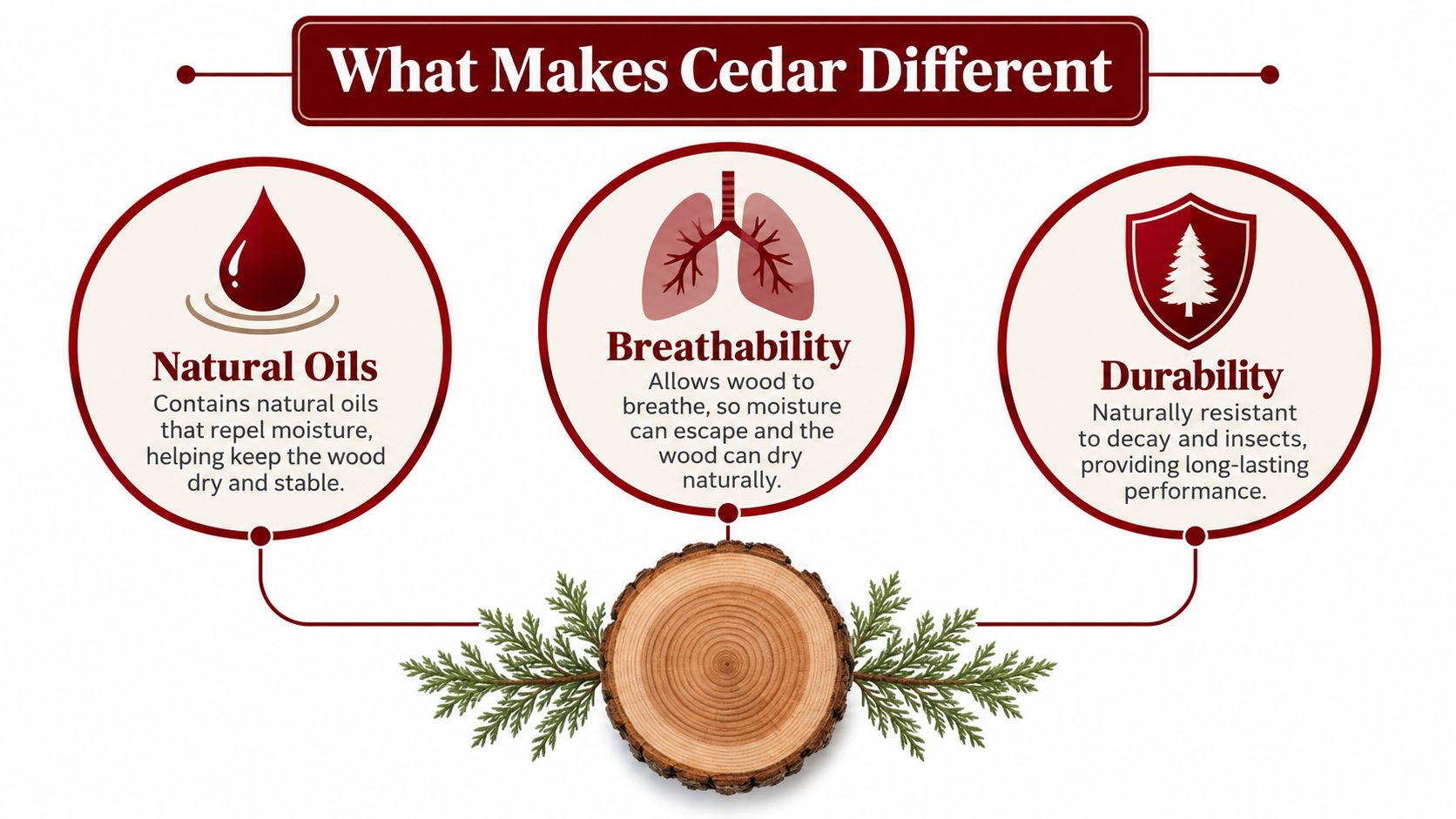
A cedar railing can feel comfortable in your hand and still need careful detailing at every connection. Cedar is a light, workable softwood with natural oils that help it handle outdoor exposure. Those qualities make it pleasant to shape and touch, but they do not make every cut or joint equally protected. In Guelph, freeze-thaw cycles repeatedly test places where water can collect.
Natural resistance is helpful, not magical
Ontario municipal deck guidance commonly recognises cedar as an acceptable decay-resistant species for wood deck guards and railings. Canada's cedar supply has also long been concentrated in British Columbia, which produces more than 87% of Canada's cedar lumber and more than 86% of the country's sawn shingles, according to the cited Statistics Canada material (Statistics Canada reference).
The material still depends on construction details. A baluster that sheds water can dry readily, while a post top with exposed end grain can act like a small drinking straw, pulling moisture into the wood. An unsealed cut or a joint packed with wet leaves creates the same problem on a smaller scale.
Workability changes the design conversation
Cedar is easy to cut and shape compared with denser exterior materials. That helps a builder create a comfortable cap rail, soften an edge, fit a corner, or match a stair transition. Familiar carpentry tools also make later repairs and refinishing more manageable.
The grain and end grain deserve special attention. Sun, moisture, and seasonal movement can produce checking or splinters, particularly where hardware compresses the wood or water reaches a fresh cut. Before assembly, seal all six sides of a cap rail, especially the end-grain cuts, with an exterior penetrating stain. This treats the hidden faces as carefully as the visible top.
A finish cannot prevent every mark, but it helps limit moisture exposure. Industry guidance recommends keeping exterior cedar sealed or stained and protecting it from constant wetting because prolonged moisture accelerates decay and checking (cedar railing care guidance).
Above-ground use suits cedar best
Cedar fits visible railing components above the deck surface, including rails, balusters, caps, and properly detailed posts. Keep them raised from soil, give water a path to drain, and inspect joints after winter. Composite and vinyl can reduce finishing work, while cedar provides a warmer hand-feel and a more natural transition between the deck, garden, and home. Its advantage is clear where people touch and look. Its vulnerable points are the joints and end grain, so those areas should receive the same care as the broad boards.
Ontario Code Essentials for Cedar Deck Railing Height and Spacing
A finished cedar railing can look straight and sturdy yet fail inspection if its measured height or openings are wrong. Ontario rules follow the deck's height above adjacent grade, not the material selected. Cedar, composite, vinyl, and pressure-treated wood must meet the same guard requirements.
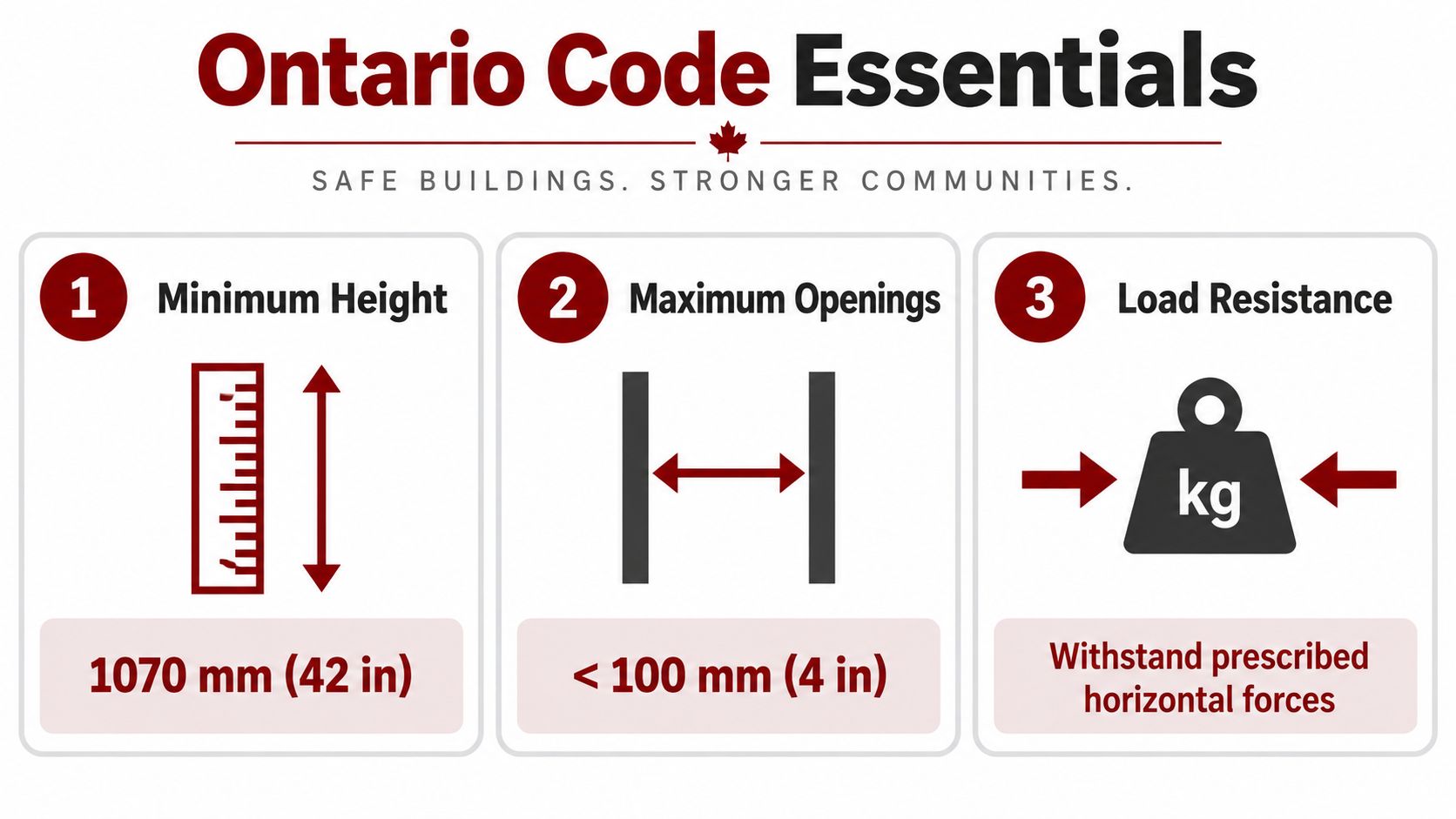
Ontario's 2024 edition through O. Reg. 163/24 is based on the National Building Code of Canada 2020. The cited guidance explains that a guard is required when the drop exceeds 600 mm. Interior guards in a dwelling must be 900 mm high, while exterior deck or balcony guards can require 1,070 mm, depending on the height above grade. Openings must prevent a 100 mm sphere from passing through (Ontario railing and baluster code guidance).
Measure the deck, not just the railing
Municipal guidance commonly describes the residential threshold this way: a guard is required when the finished deck surface is more than 600 mm above grade. The minimum guard height is commonly 900 mm when the drop is under 1.8 m, and 1,070 mm when the drop exceeds 1.8 m (Springwater deck guide).
A sloped Guelph lot can make that measurement less obvious. The ground may sit lower at one corner than another, so the relevant grade must be considered around the structure. Include stairs, landings, and planned deck extensions in the railing layout before posts are set.
The opening rule needs the same care. Vertical pickets, the space below the bottom rail, and other guard openings generally must stop a 100 mm sphere, often described as a 4-inch limit in Ontario railing guidance (deck railing opening requirements). A cedar baluster pattern can look evenly spaced while still missing the requirement. Draw the layout and measure the actual gaps before cutting material.
Let the drawings solve the awkward spots
Corners, stair runs, multiple levels, and changing grades rarely work well with a straight-section plan. Permit-ready drawings establish post locations, guard heights, baluster spacing, and transitions before installation. They also help protect cedar joints from being forced into awkward angles, where movement and end-grain exposure can create maintenance problems.
For a homeowner-friendly explanation, review these Ontario deck railing code and inspection considerations.
The video below offers another visual explanation of railing planning and construction considerations.
Popular Cedar Railing Styles and How to Choose Your Look
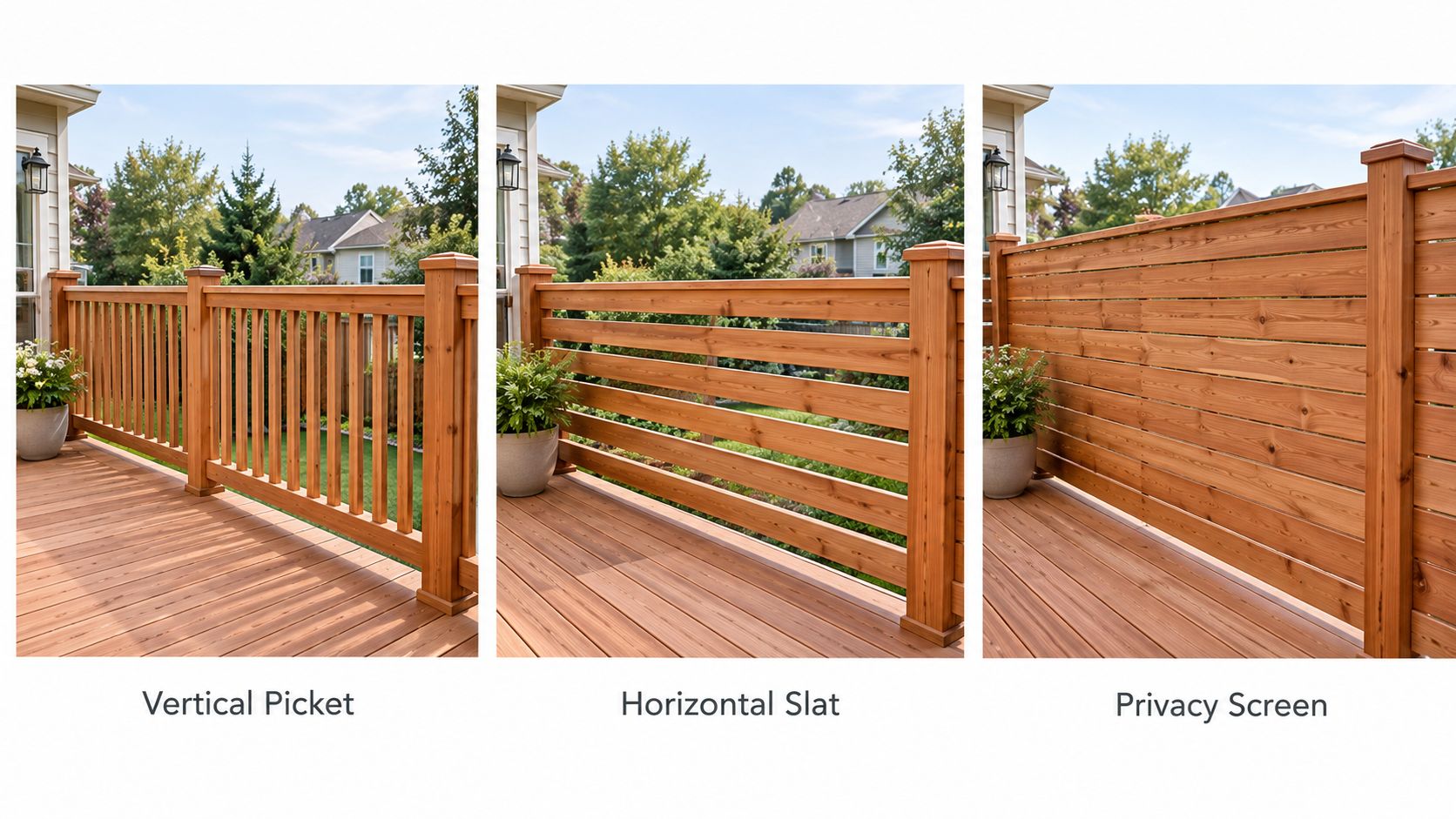
Once the measurements are settled, cedar gives you plenty of room to shape the deck's personality. The same posts and guard height can feel traditional with closely arranged vertical pickets, or modern with clean horizontal lines. Style should follow how you use the deck, not only what looks attractive in a product photo.
The main options in plain language
Vertical picket railings are the familiar choice for family decks. They keep the view relatively open, create a classic rhythm, and make the code-controlled opening layout easy to organise. The top cap can be narrow and understated or broad enough to act as a comfortable handrail.
Horizontal slat railings offer a more contemporary appearance. Their long lines can make a deck feel wider, but they need careful detailing and spacing. They can also collect leaves and snow differently from vertical pickets, so cleaning access deserves attention.
Privacy screens block more of the neighbour's view and can create a sheltered dining corner. They also reduce openness and may catch more wind, so the supporting posts, attachment points, and structural design need to suit the site.
Cap-rail variations change the experience more than many homeowners expect. A wide cedar cap feels furniture-like and pleasant to touch, while a slim cap gives a lighter, sharper profile. Post caps can add a traditional finish, though every extra ledge becomes a place to inspect for trapped moisture.
Cedar Railing Style Comparison for Guelph Homes | Best For | Maintenance Note |
|---|---|---|
Vertical picket | Family use, open sightlines, traditional homes | Check picket ends, bottom rail, and fasteners for debris |
Horizontal slat | Modern layouts and strong linear design | Clean between slats and inspect connections where moisture can linger |
Privacy screen | Wind-screened seating and visual separation | Watch post tops, broad panels, and areas exposed to prolonged wetting |
Broad cap rail | Comfortable hand contact and a finished look | Keep the top surface clean, sealed, and free of standing water |
The practical choice often becomes clear when you stand in the yard. If the deck faces a garden you want to see, vertical pickets may preserve the view. If the neighbouring property dominates the sightline, a privacy section may be worth adding only where it's needed rather than along the entire edge.
Finishing and Seasonal Care That Keeps Cedar Beautiful
Cedar maintenance in Guelph is less about chasing a perfect colour and more about controlling moisture at the vulnerable points. Rails and balusters dry relatively well when exposed to air. Post tops, cap joints, cut ends, screw heads, and tight corners deserve closer attention because they can hold water during repeated freeze-thaw cycles.
Start with a gentle clean. Remove leaves, soil, pollen, and other debris before they sit against the wood. A soft brush and suitable exterior cleaner are usually safer than aggressive pressure washing, which can roughen the surface and raise the grain.
A simple care rhythm
Inspect the touch points: Run your hand carefully along the cap rail and stair handrail. Look for splinters, raised grain, loose sections, or sharp fasteners before someone catches a sleeve or hand.
Check the water traps: Examine post tops, rail joints, baluster ends, and the underside of caps. Clear trapped debris so wet material doesn't remain pressed against cedar.
Watch the hardware: Loose fasteners can allow movement and create openings around joints. Replace or tighten hardware with exterior-rated products appropriate for the assembly.
Protect exposed cuts: End grain absorbs moisture more readily than a well-protected face. Seal or finish cut ends according to the coating manufacturer's instructions.
Refresh the finish: Clean and re-seal or stain when the surface begins to lose protection, rather than waiting until checking and grey weathering have become severe.
Local wood railing care guidance also highlights inspection for splinters, loose fasteners, trapped debris, and finishing upkeep, with particular concern around joints and exposed areas (Guelph wood handrail care guidance). For a broader maintenance routine, homeowners can use this cedar deck maintenance guide.
Give each season a different job
In spring, inspect for movement, lifted grain, and damage left by winter moisture. Summer is a good time to clean and refinish when the surface can dry properly. In autumn, remove leaves from corners and under rails before wet weather settles in. Before winter, make sure water can drain away from caps, posts, and connections.
Cedar doesn't need to look untouched to be successful. Some homeowners like the natural silvering that develops outdoors, while others prefer to retain a warmer tone with stain. Either route works better when the railing is cleaned, allowed to dry, and protected from constant wetting.
Cost Installation and Permit Planning for Cedar Railings
A cedar railing estimate becomes easier to understand when you separate the visible boards from the work that makes the system safe and durable. The main cost drivers are the total railing length, number of posts, corners and stairs, cap-rail profile, baluster style, hardware, finish, demolition, and access to the site.
A straight run with simple vertical pickets is a different project from a deck with multiple stair sections, privacy panels, angled corners, and custom post caps. Cedar grade and board dimensions also affect the appearance and how much sorting or preparation the installer must do. Premium exterior fasteners and structural hardware add to the material list, but they support a cleaner installation and more dependable connections.
What the installation process should include
A careful project generally begins with an on-site assessment. The builder records deck dimensions, existing conditions, grade changes, stairs, property constraints, and the homeowner's priorities. The design then turns those observations into a railing layout, with post positions and guard details coordinated before construction.
Permit-ready drawings matter when the deck height, stairs, or site conditions make the code requirements less obvious. They can help municipal reviewers and installers work from the same information, reducing the risk of cutting material before a height or opening issue has been resolved.
Material comparison also belongs in the planning conversation. Cedar offers natural colour, grain, workability, and a warm hand-feel. Pressure-treated wood can suit a tighter initial budget. Composite and vinyl can appeal to homeowners who want less regular finishing, although they create a different visual and tactile experience. The right choice depends on the balance you're willing to make between upfront scope, appearance, and ongoing care.
Contractors who are improving their customer communication and project workflow may also find Recepta.ai for contractors useful when organising enquiries and follow-up. For homeowners, the important result is a clear estimate that identifies material, labour, finishing, permit support, site conditions, and any allowances instead of hiding them in one vague total.
Planning Your Cedar Railing Project With Confidence
Cedar makes sense when you want a railing that feels warm, looks natural, and can be maintained as part of ordinary home care. It's a strong fit for above-ground components, especially when the design sheds water and protects end grain. It's less suitable for a homeowner who wants to install the railing and never think about cleaning, inspection, or finishing again.
Use this short decision check before choosing a style:
Look: Does the grain and colour complement the house, deck boards, and garden?
Use: Do you need open views, child-friendly pickets, a comfortable cap, or a privacy section?
Site: Have grade changes, stairs, corners, and future expansions been measured?
Code: Does the layout account for the 600 mm guard trigger, applicable 900 mm or 1,070 mm height, and 100 mm opening limit identified in Ontario guidance (Ontario deck guard requirements)?
Care: Are you prepared to inspect joints, post tops, fasteners, and exposed end grain?
Alternative: Would composite or vinyl better suit your preferred maintenance routine?
A good railing plan brings those answers together before the first post is installed. It protects the view, supports everyday safety, and gives cedar the detailing it needs to handle Guelph's changing weather.
Guelph Deck Builders provides consultation, site assessment, concept design, permit-ready drawings, material guidance, and code-conscious installation for cedar, composite, vinyl, and pressure-treated deck projects. If you're ready to compare railing styles and plan a durable fit for your yard, visit Guelph Deck Builders to start the conversation.
Comments